
How does bodywork help my breech baby?
Updated: Jan 28
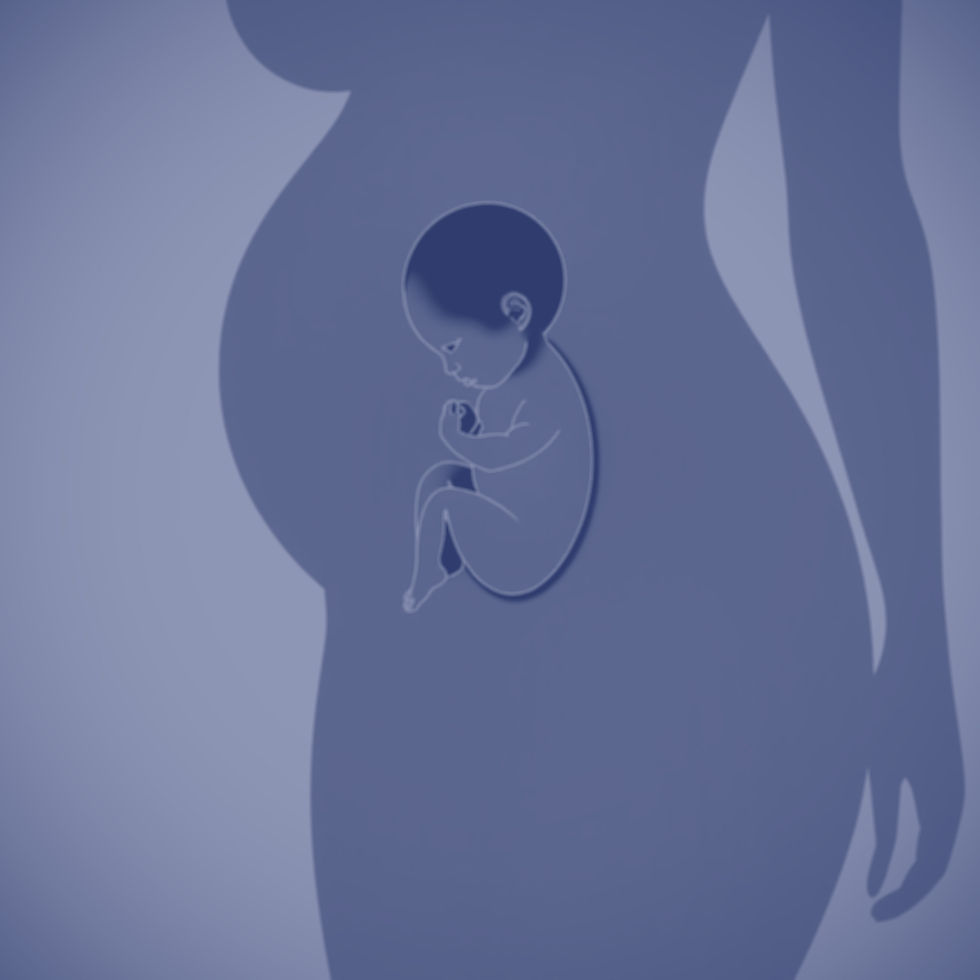
A breech baby, or a baby who is presenting head up in the third trimester, is not an uncommon occurrence. Babies are able to move into many positions in the amniotic fluid. Only as they get bigger, does it become harder for them to move out of this position. Historically, this position still led to vaginal delivery, when providers still have the skills and training to do this. Currently there are few providers with this knowledge, and even fewer hospitals that will allow those providers to deliver breech babies vaginally.
There was a famous study done in the year 2000 called the Term Breech Trial, which compared vaginal breech to cesarean. It found cesarean to be somewhat safer than vaginal breech birth, but a later, larger trial in France and Belgium, the PREMODA Study found virtually no difference in outcome. This can be due to a few factors. Vaginal breech had been declining in the US, so even those who were self-reporting competency at that time may have had variable levels of skill, and a significant number of the births in the trial did not have a skilled breech provider. Over half of the 13 stillbirths in Term Breech Trial, breech group that had nothing to do with the babies' presentation; they were high risk pregnancies. Many locations did not have access to emergency cesareans (which would equally be an issue in breech or cephalic delivery). In other studies stillbirth rates for babies are consistently similar for vaginal breech, vaginal cephalic, or cesarean (.2%, .1%, .05%). Also many providers have selection criteria to further lower the risk of vaginal breech (i.e. baby size, gestation, etc). There are short-term morbidities in the vaginal breech that do not translate into long-term issues (such as lower apgar), while severe maternal morbidities are higher in the cesarean groups.
In our current climate, many providers do not pay much attention to this until week 36, because the primary medical intervention for breech is an ECV (external cephalic version - where provider manually applies pressure to turn baby). This is not typically done until week 37. There are things that can be done earlier to help babies turn cephalic (head down). For example there are spinning babies® techniques that help offer the baby the possibility of moving.
Another often overlooked technique is skilled massage therapy. This takes training and experience, and is not general prenatal massage. There are particular muscles and ligaments that may be tighter, causing a smaller space for the baby to move through, which make it harder for a baby to find a new position. There can also be tension in the connective tissue that once released can open space for the baby to move.
Acupuncture is also a popular modality used with breech babies, particularly with moxibustion. This can encourage baby to find a head-down position, and to open space in the body for the baby to make this movement.
In some cases Chinese herbs can also help support this movement, by working on imbalances in the mothers body in terms of fluid dynamics and blood and/or qi deficiency
Engaging these techniques earlier (as early as 30 weeks) can be really effective in helping the baby have enough space and encouragement to find a new position.
There are a number of different factors that can cause or contribute to breech presentation. These can include the shape of the uterus (i.e. arcuate, bicornuate), shape of the pelvis, soft issue imbalance, short umbilical cord (generally around the neck), abdominal tension, polyhydramnios (often, but not always, leading to an unstable lie), oligohydramnios, stress, and posture.
Of the above factors, many can be resolved with skilled bodywork, acupuncture, and other auxiliary therapies and exercises. Ones that can be more complicated, can still be helped. For example, a short cord around the neck cannot be resolved with bodywork alone, Carol Phillips' forward leaning inversion can help resolve the cord, and then therapies can be used to help open space and encourage the turn. Oligohydramnios, low fluid, can minimize babies' space to turn. Using acupuncture and nutrients can try to support the function of the placenta, and then bodywork can help maximize the space available around the uterus.


Comments